

Environmental claims for custom bags need evidence for the complete construction, not just a familiar material name. Define the exact claim you intend to make and obtain documentation covering the relevant product, components and stated conditions before publishing it.
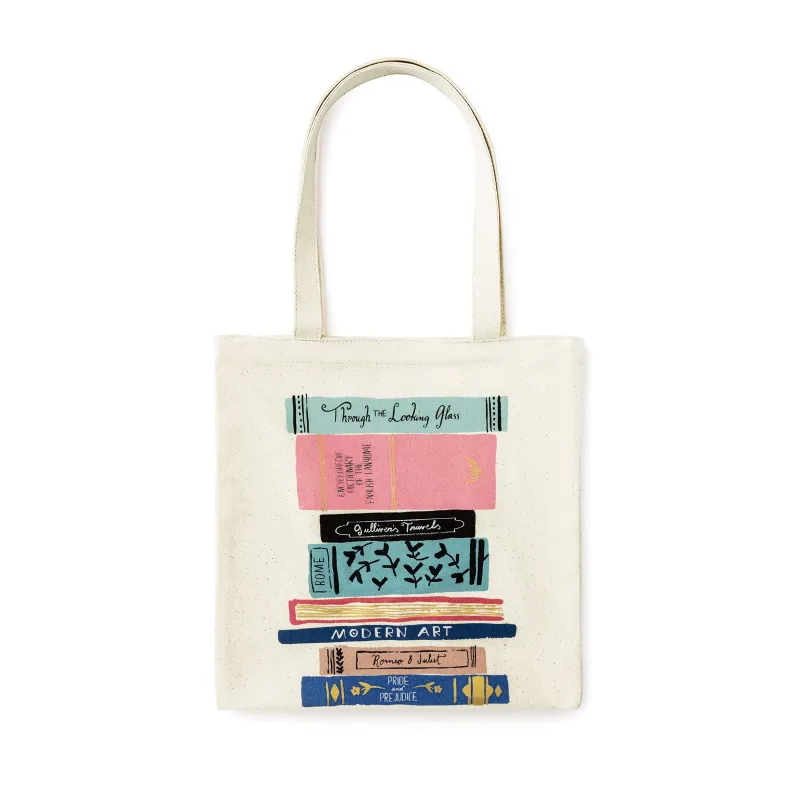
Cream Tote with a Printed Book Design. Shown as a shape and construction reference; order specifications are confirmed separately.
Treat material identity, recycled content, organic origin, biodegradation and recyclability as different claims. Ask what the document actually covers: raw material, a named component, the finished article or a production site. Check the scope, dates and product reference with the issuer where appropriate. Coatings, inks, linings and closures may change the composition of the final bag. Any claimed degradation time needs conditions and relevant evidence; do not transfer a result for one component to the whole bag.
Compare candidates using a written requirement rather than a universal best-material ranking. Request labelled swatches and itemised composition, weight or thickness, finish and colour references. Keep the bag structure and intended contents consistent when comparing finished samples so that a change in handles or lining is not mistaken for a material improvement. Record the chosen trade-offs in feel, appearance, construction and price, and identify which properties still require an agreed test.
Keep a dated approval record with photographs of the sample and a list of any open questions. When a feature changes, confirm whether the drawing, artwork, packing or quotation also needs revision. Send Hansun the intended contents, quantities and required delivery date to discuss feasible options and the current sampling plan. Minimum quantities, sample charges, production timing and performance requirements should be confirmed for the specific order, not inferred from another style.
This website uses cookies to ensure you get the best experience on our website.

 Español
 Português
 日本語
 العربية



 Phone
Comment
(0)